
You’re typing a text or finishing an email, and suddenly you freeze on one tiny detail: should it say it’s called or it called? They look almost identical, but they mean completely different things.
Get it wrong and your sentence either loses its meaning or reads like a grammar mistake. The good news is that its called vs it called comes down to one simple rule you’ll never forget once you see it clearly.
Quick Answer
It’s called is the correct phrase when you’re naming or identifying something (“This dish is called lasagna”). It called is a past-tense action, meaning something made a phone call or a sound (“The bird called at dawn”). They aren’t interchangeable, and mixing them up is one of the most common small grammar slips in everyday writing.
Its Called vs It Called: The Core Difference
The confusion here isn’t really about “its” versus “it’s” (though that’s a related mistake too). It’s about “it’s called” versus “it called.”
- It’s called = “it is called.” This is a contraction plus the passive verb called, used to name or label something.
- It called = the simple past tense of the verb call. This means something actively made a call, a sound, or a request.
One phrase describes what something is named. The other describes what something did. Once you separate those two ideas, the choice becomes automatic.
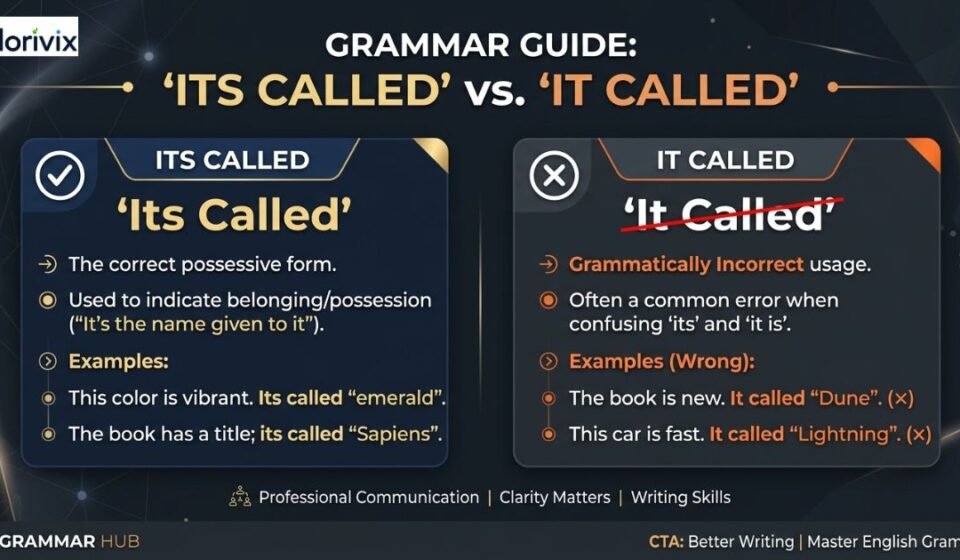
“Its Called” Is Never Correct
Before going further, it’s worth clearing up a related error: “its called” without an apostrophe is always wrong. “Its” without an apostrophe is a possessive pronoun (like “its color” or “its size”), and possessive pronouns can’t attach directly to “called” in this way. If you mean “it is called,” you need the apostrophe: it’s called.
So really, there are only two correct options in this comparison:
- It’s called (it is called)
- It called (past tense of “to call”)
“Its called” isn’t a third option. It’s simply a typo.
When to Use “It’s Called”
Use it’s called whenever you’re identifying, naming, or labeling something. It answers the question “What is this thing named?”
Examples:
- This pasta dish is Italian. It’s called cacio e pepe.
- Have you seen that new app? It’s called Notion.
- The condition is rare. It’s called synesthesia.
- It’s called teamwork for a reason.
In every example, “it’s called” is followed by a name, term, or label. That’s the pattern to watch for.
When to Use “It Called”
Use it called when something performed the action of calling, whether that means a phone call, an animal sound, or a request for something.
Examples:
- My phone buzzed. It called three times before I answered.
- The owl sat in the tree. It called softly into the night.
- The committee reviewed the proposal, and it called for major changes.
- The customer service line rang, but it called back within minutes.
Notice that “it called” is followed by an action, a time reference, or a reason, never a name or label.
Its Called vs It Called: Comparison Table
| Phrase | Meaning | Grammar Type | Example |
| It’s called | It is named/labeled | Contraction + passive verb | The color is teal. It’s called teal because it mixes blue and green. |
| It called | It performed the action of calling | Simple past tense verb | The alarm went off, and it called for immediate action. |
| Its called | Not standard English | Incorrect spelling | ❌ Avoid entirely |
A Simple Test You Can Use Every Time
If you’re stuck mid-sentence, try this trick: replace the phrase with “it is called.”
- “This drink ___ a mojito.” → “This drink is called a mojito.” ✅ Use it’s called.
- “The dog barked, and ___ for attention.” → “The dog barked, and it is called for attention.” ❌ Doesn’t make sense. Use it called.
If “it is called” fits naturally, go with it’s called. If it sounds off, you need the past-tense it called instead.
Common Mistakes to Avoid
Most errors with this pair fall into three categories:
1. Dropping the apostrophe. Writing “its called” instead of “it’s called” is the single most frequent mistake. Spellcheckers often miss it because “its” is a real word, just the wrong one here.
2. Using “it called” to name something. Saying “This fruit it called a dragon fruit” is grammatically broken. You need “it’s called” to introduce a name.
3. Overcorrecting into “it’s calling.” Some writers swap “it called” for “it’s calling” out of habit, but that changes the tense entirely. “It called” is a completed past action; “it’s calling” is happening right now. Match the phrase to the timeframe you actually mean.
American vs British English: Does It Matter Here?
Unlike some grammar rules that shift across dialects, it’s called and it called work the same way in both American and British English. There’s no regional variation in the contraction rule or the past-tense usage. The apostrophe rule for “it’s” versus “its” is a universal English convention, not a matter of dialect. So whether you’re writing for a US or UK audience, the guidance above applies without changes.
“It’s Called” vs “It Is Named” vs “It’s Known As”
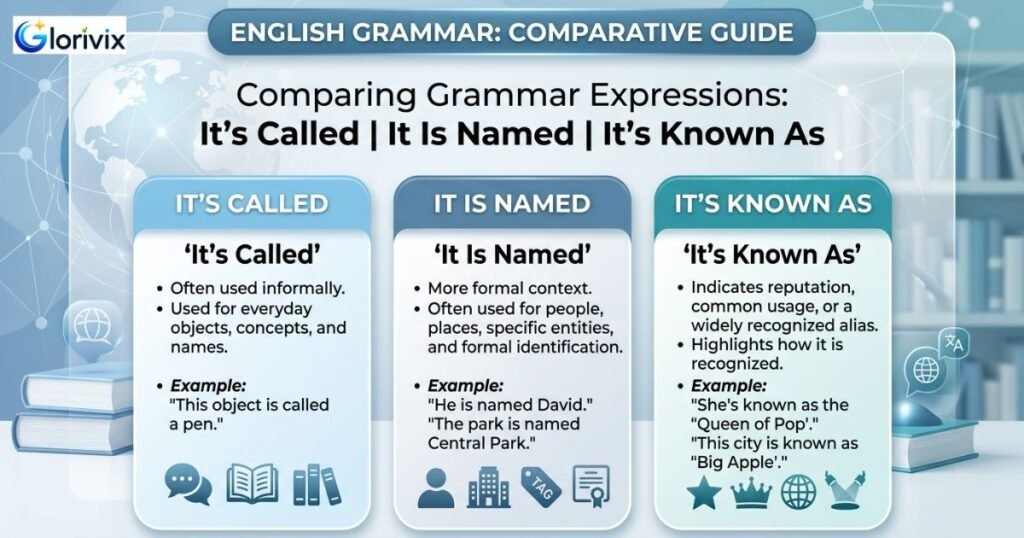
Since it’s called shows up so often, it helps to know its close cousins and when each fits best:
- It’s called — the most casual, everyday option. Best for conversation and informal writing.
- It’s known as — slightly more formal, often used for nicknames or reputational labels. (“The city is known as the Big Apple.”)
- It is named — used for formal or official naming, especially institutions or awards. (“The scholarship is named after the founder.”)
All three can work in similar contexts, but it’s called remains the most natural choice for everyday explanations.
Why This Mistake Happens So Often
Part of the confusion comes from how English handles contractions. “It’s” can mean “it is” or “it has,” and both compress into the same three letters plus an apostrophe. Add in the possessive “its” (no apostrophe), and you’ve got three lookalike words doing three different jobs. Voice typing and autocorrect make it worse, since many keyboards default to whichever version was typed most recently, apostrophe or not. Slowing down for a half-second before hitting send solves most of these slips.
Quick Reference: Spotting the Right Phrase in Seconds
Ask yourself one question before you write:
- Am I naming something? → It’s called
- Did something make a call, sound, or request? → It called
- Am I describing possession? (its color, its shape) → Its (no apostrophe, no “called”)
This three-way check covers almost every situation you’ll run into.
FAQs
Is “its called” ever correct?
No. “Its called” is not standard English in any context. If you mean “it is called,” you need the apostrophe: it’s called. If you’re using “its” as a possessive, it should be followed by a noun, not the word “called.”
What’s the difference between “it’s called” and “it was called”?
It’s called describes something’s current name (“The app is called Notion”). It was called describes a past name that may have changed (“The app was called Idea Docs before it launched”). The tense shift matters if the name has since been updated.
Can “it called” refer to something other than a phone call?
Yes. It called can describe any sound or action tied to the verb “call,” including animal sounds, formal requests, or announcements. For example, “The report called for stricter regulations.”
How do I remember the difference quickly?
Try substituting “it is” into the sentence. If it still makes sense, use it’s called. If it sounds wrong, you likely need the past-tense it called instead.
Is this the same issue as “its” vs “it’s” in general?
It’s related but more specific. The general its vs it’s rule covers possession versus contraction everywhere. This comparison focuses specifically on the phrase before the word “called,” which is where the mistake shows up most often in real writing.
Summary
The choice between it’s called and it called comes down to naming versus action. Use it’s called when you’re identifying or labeling something, and use it called when something performed the act of calling.
“Its called” without an apostrophe is never correct in either case. Once you run the simple “it is” substitution test, choosing the right phrase becomes second nature, and you’ll avoid one of the most common small errors in everyday English writing.