

You typed it, stared at it, and something felt off. Was it “openned” or “opened”? This tiny mix-up trips up more writers than you’d expect, especially when typing fast or double-checking a text message before hitting send.
The confusion usually comes from the pull of double consonants in other English words. Here’s the good news: only one of these spellings is actually correct, and once you see the reason why, you’ll never second-guess it again.
Quick Answer
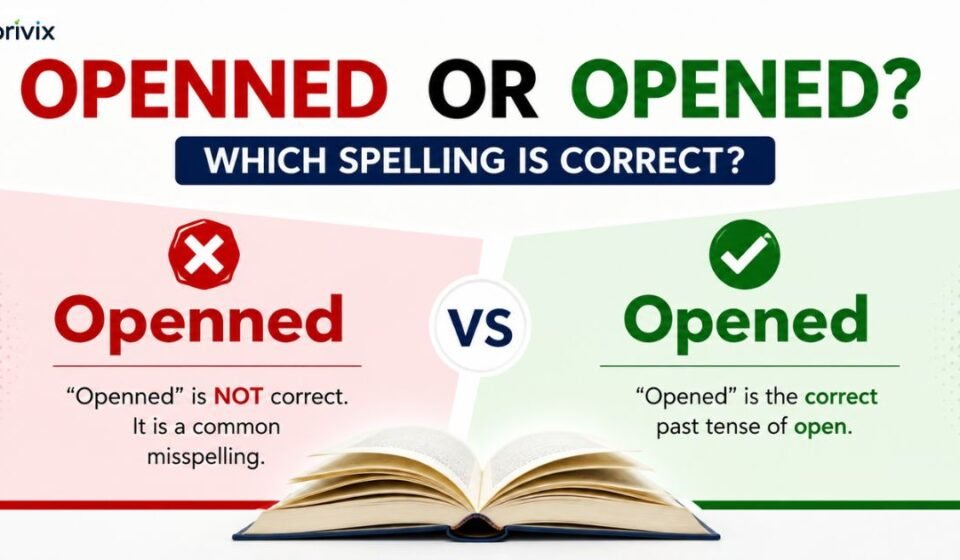
Opened is the correct spelling. It is the past tense and past participle of the verb “open.” Openned, with two N’s, is a common misspelling and is not a recognized word in English. Just remember: one “open” plus “-ed” equals “opened,” nothing more.
What Does “Opened” Mean?
“Opened” describes the action of making something no longer closed, whether that’s a door, a store, a conversation, or an opportunity. It’s the simple past tense of “open,” and it also works as a past participle in perfect tenses.
- Past tense: She opened the window before breakfast.
- Past participle: The shop has opened three new branches this year.
Both uses follow the same spelling. There’s no version of this word that includes a double “n.”
Why Do People Write “Openned” Instead?
The extra “n” isn’t random. English has plenty of verbs where the final consonant doubles before adding “-ed,” such as “stop” becoming “stopped” or “plan” becoming “planned.” Writers often apply that same pattern to “open” out of habit, especially since the word ends in “n” already.
But that doubling rule only applies under specific conditions, and “open” doesn’t meet them. Autocorrect sometimes lets the mistake slide too, since “openned” can look plausible at a glance, particularly in fast typing or texting.
The Simple Rule to Never Misspell “Opened”
Here’s the actual grammar rule behind consonant doubling, and why “open” skips it:
A final consonant is usually doubled before “-ed” only when:
- The word ends in a single consonant preceded by a single vowel.
- The word has only one syllable, or the stress falls on the last syllable.
“Open” has two syllables, and the stress falls on the first syllable (OH-pen, not oh-PEN). Because the stress isn’t on the final syllable, the consonant does not double. That’s why we get “opened,” not “openned.”
Compare this to “prefer,” which is stressed on the second syllable and becomes “preferred” with a doubled “r.” Same idea, opposite result, because the stress pattern is different.
Openned vs Opened: Side-by-Side Comparison
| Feature | Opened | Openned |
| Correct spelling | Yes | No |
| Found in dictionaries | Yes | No |
| Grammar rule support | Follows standard “-ed” rule | Misapplies consonant-doubling rule |
| Used in formal writing | Yes | Never |
| Common in typing errors | No | Yes |
How to Use “Opened” Correctly in a Sentence
Seeing the word in context makes the correct form easier to remember. Here are a few natural examples:
- The bakery opened its doors at 7 a.m.
- He opened the email and read it twice.
- The committee opened the meeting with a short update.
- Once the file was opened, the data loaded instantly.
- New markets have opened up for small businesses this year.
Try swapping “openned” into any of these and it immediately reads as a typo, not a stylistic choice.
Opened in Everyday vs Formal Writing
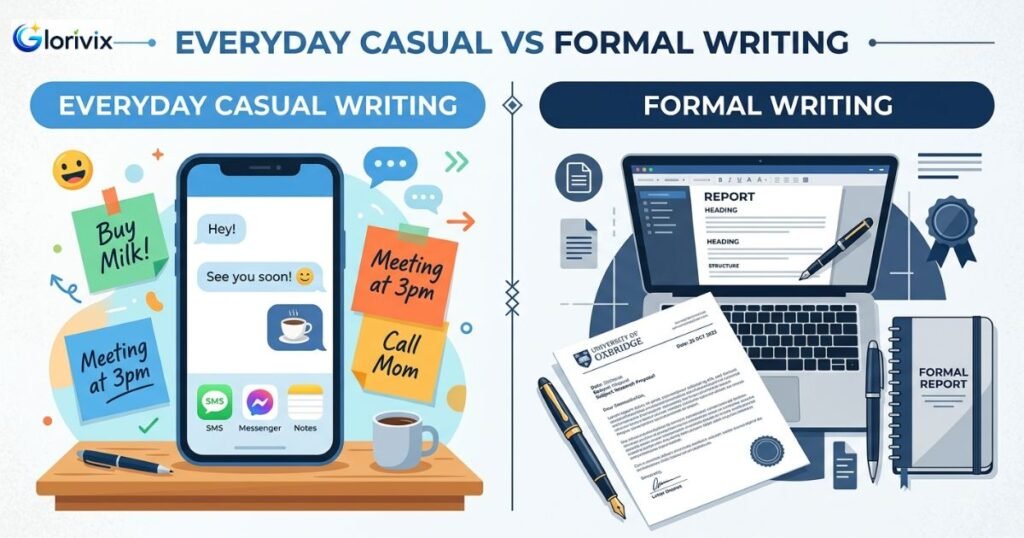
The spelling of “opened” never changes based on tone or setting, but it’s worth seeing how the word fits into different types of writing:
Casual conversation: “I just opened your message, sorry for the late reply.”
Professional writing: “The company opened its new headquarters in March.”
Academic writing: “The study opened with a review of existing literature.”
Digital communication: “Your ticket has been opened and assigned to a support agent.”
Whether you’re texting a friend or writing a formal report, “opened” is always the correct choice. Context changes the sentence, not the spelling.
Common Mistakes to Avoid
Beyond “openned,” a few related errors show up often:
- Openned — incorrect double-n spelling.
- Opend — missing the “e” before “-ed.”
- Openned up vs opened up — the phrasal verb still uses the single-n spelling.
- Confusing “opened” (verb) with “open” used as an adjective, as in “the store is open,” where no “-ed” is needed at all.
A quick way to catch the mistake: read the word out loud. “Opened” has two syllables (OH-pend), while “openned” tempts you to add a stress that doesn’t belong there.
Is There a British vs American English Difference?
No. Unlike words such as “colour/color” or “travelled/traveled,” there’s no regional spelling split here. Both American and British English use opened, with a single “n,” in every context. This is one of the rare cases where English speakers worldwide agree completely.
Other Forms of “Open” Worth Knowing
Understanding the full verb pattern helps the correct spelling stick:
| Form | Word |
| Base form | open |
| Past tense | opened |
| Past participle | opened |
| Present participle | opening |
| Third person singular | opens |
Notice that even “opening” keeps the single “n.” The doubling error tends to show up specifically with “-ed,” which is likely why it’s the version people search for most.
Words That Mean the Same as “Opened”
If you want variety in your writing, these synonyms can substitute for “opened” depending on context:
- Unlocked
- Revealed
- Launched
- Unveiled
- Initiated
- Uncovered
For example, “The museum unveiled its new exhibit” works just as naturally as “The museum opened its new exhibit,” depending on the tone you’re going for.
Quick Spelling Test
Try picking the correct word in each sentence before checking your answers.
- She ______ the box carefully. (opened / openned)
- The store has just ______ downtown. (opened / openned)
- He ______ his laptop and started typing. (opened / openned)
- The bridge was ______ to traffic last year. (opened / openned)
Answers: All four should use opened.
Why Getting This Right Matters
Spelling errors like “openned” can quietly undercut how professional your writing looks, especially in emails, resumes, or published content. Search engines and readers alike associate clean spelling with credibility.
Getting a common word wrong, even by one letter, can distract from an otherwise strong message. Since “opened” appears constantly in everyday writing, locking in the correct form pays off far more often than rarer vocabulary would.
Frequently Asked Questions
Is “openned” ever correct in any dialect of English?
No. “Openned” is not recognized in any standard dialect of English, whether American, British, Australian, or Canadian. It’s considered a spelling error, not a regional variant.
Why does “open” not double its final consonant like “stop” does?
Doubling depends on where the word’s stress falls. “Stop” is one syllable, so it doubles. “Open” has two syllables with stress on the first one, so the final consonant stays single.
What is the correct past participle of “open”?
The past participle is opened, the same as the simple past tense. For example, “The gates have opened” and “The gates opened yesterday” both use the identical spelling.
Does spell check always catch “openned”?
Most modern spell checkers flag it, but some autocorrect tools or quick-typing apps can miss it, especially in casual messaging. It’s still worth proofreading manually.
Is “opened up” different from “opened”?
Not in spelling. “Opened up” is a phrasal verb often used for emotional or figurative openness, like “she finally opened up about her feelings,” but the spelling of “opened” stays the same either way.
Conclusion
The rule here is simple and permanent: opened is correct, openned is not. The mix-up comes from applying a doubling pattern that doesn’t fit this word’s syllable stress.
Once you remember that “open” is stressed on its first syllable, the single “n” in “opened” will start to feel automatic, whether you’re writing a quick text or a formal report.