
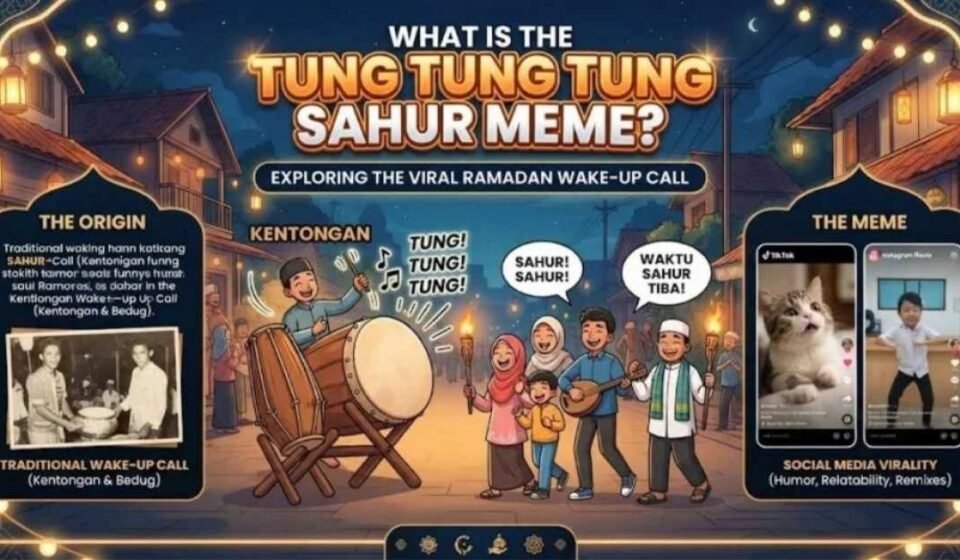

Saw a weird wooden guy with a bat all over your feed and got confused about what people are even saying? You’re not alone. Tung Tung Tung Sahur has taken over TikTok, and half the internet has no clue what the phrase actually means or where it came from.Here’s the short version. It’s not a name, it’s not Italian, and it’s definitely not some ancient monster legend.
It’s a mash-up of a drumming sound and a real Ramadan tradition, wrapped inside one of 2025’s biggest viral memes. Stick around and you’ll know exactly what it means, why it went viral, and why that spooky wooden creature has nothing to do with actual Islamic tradition.
Quick Answer
Tung Tung Tung Sahur means “wake up, it’s time for the pre-dawn meal.” That’s it. That’s the whole phrase in plain English translation.
“Tung tung tung” copies the sound of a wooden drum. Sahur (also written as Suhoor) is the meal Muslims eat before sunrise during Ramadan, right before the daily fast starts. Put them together and you get a rhythmic call telling people to get up and eat before the sun comes up.
The internet took that simple Indonesian expression and turned it into a viral AI monster with a baseball bat. But the core meaning never really changed. It’s still just a wake-up call, dressed up in brainrot clothing.
What Does Each Part Mean?

Let’s break this down piece by piece, because that’s really the fastest way to get it.
Tung tung tung is onomatopoeia. It’s not a real word with a dictionary entry. It’s a sound imitation, like “bang bang” or “tick tock.” Here, it copies the drumming sound of a wooden percussion instrument used across Indonesia and nearby regions.
Sahur is the actual meaningful word in the phrase. It comes from Arabic and refers to the pre-dawn meal before fasting. Muslims eat this meal, then start their daily fast once dawn prayer time hits. So when you hear the full phrase, you’re basically hearing “drum sound, drum sound, drum sound, breakfast time.”
What Is Sahur?
Sahur is the early morning meal eaten before the fast begins each day during Ramadan. Think of it as the fuel-up meal, not the celebration meal. That one comes later, at sunset.
Families usually eat energy-giving foods and drink plenty of water during sahur. Why? Because they won’t eat or drink again until sunset. Rice, eggs, dates, and warm drinks are common picks. It’s less about a feast and more about setting yourself up for a long day of fasting.
This meal holds real weight in Islamic fasting practice. There’s even a teaching that eating sahur carries blessing, which is one reason communities go out of their way to wake each other up for it rather than let people sleep through it.
Why Do People Make Noise Before Sahur?
Here’s the practical problem. Sahur happens in the middle of the night, right before dawn. Most people are asleep. Somebody has to wake them up, and a phone alarm clock doesn’t always cut it when you’re exhausted.
So communities in Indonesia and Southeast Asia came up with a community wake-up call using sound. Someone walks through the neighborhood banging a kentongan, which is a wooden slit drum, making a hollow sound that carries. Some places use a bigger drum called a bedug, or even a gong.
This isn’t some ancient forgotten custom either. Even with smartphones and modern alarms everywhere, this cultural tradition sticks around. There’s something about a real human walking the streets, plus the sound of neighbors doing the same thing, that a phone alarm just can’t replace. It builds a community activity feeling instead of an isolated one.
What Is the Tung Tung Tung Sahur Meme?
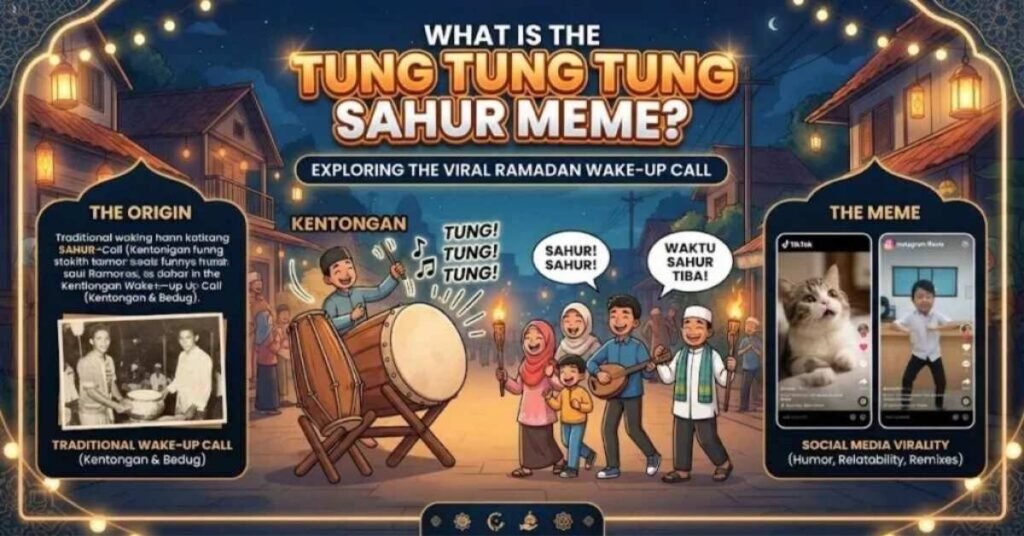
Now here’s where it gets weird, in a fun way. In February 2025, a TikTok creator posted an AI-generated video of a tall, wooden, humanlike creature holding a bat, standing alone at what looks like a bus stop at night.
The Indonesian narration playing over the clip described this thing as a scary anomaly that only shows up at sahur time. According to the fictional story, if someone gets called for sahur three times and doesn’t respond, this creature shows up at their house.
That single TikTok video blew up. Within weeks it had racked up tens of millions of views, and the character earned the nickname “Triple T” online. People started making fan drawings, short animations, remixes, and even putting the creature into crossovers with other viral meme characters. It became one of the biggest viral 2025 memes almost overnight.
English Meaning of the Original Meme Story
Let’s translate the actual story behind the first video, since a lot of people search for this specifically. The narration, once you translate it into English, goes roughly like this:
- Tung tung tung tung sahur, a scary anomaly that only comes out at sahur
- If someone is called for sahur three times and doesn’t answer, this creature comes to your house
- The creature makes a sound like someone hitting a kentongan
- Share this with your friends who struggle to wake up for sahur
That’s the whole fictional warning. It’s basically a horror-comedy spin on the very real struggle of dragging yourself out of bed at 3 AM to eat. Anyone who’s ever ignored three wake-up calls from a parent knows exactly what feeling this is joking about.
Is Tung Tung Tung Sahur Italian?
No, and this trips up a lot of people. The confusion comes from the Italian brainrot trend that was already popular before this character showed up. Things like a shark wearing sneakers or a crocodile that’s also a plane, those came first, narrated in Italian text-to-speech voices.
Tung Tung Tung Sahur got grouped into that same brainrot category because it shares the surreal, absurd style. But the linguistic origin of the phrase itself is Indonesian, not Italian. The name, the sound, and the cultural reference all trace back to Ramadan tradition in Indonesia, not Italy.
So it’s fair to call it part of the “Italian brainrot” genre in terms of internet classification. It’s not fair to call the phrase itself an Italian phrase. Those are two different things, and mixing them up is one of the most common mistakes people make when explaining this meme.
Why Is It Called Brainrot?
Brainrot is internet slang for content that’s intentionally low-effort, repetitive, and a little nonsensical, yet somehow impossible to stop watching. It’s not a compliment exactly, but it’s not really an insult either. It’s more of a shrug and a laugh.
This character fits the label because of its repetitive names, its odd visual design, and the way it gets remixed endlessly with zero explanation needed. You don’t need context to laugh at a wooden man with a bat. That’s kind of the point.
Teenagers and younger internet users especially latched onto this style. Surreal humor spreads fast because it doesn’t need translation or deep thought. You either find it funny immediately, or you don’t, and either way you probably won’t forget it.
How Do You Pronounce Tung Tung Tung Sahur?
Pronunciation trips people up more than you’d expect. Here’s the simple version.
“Tung” rhymes with “song,” but swap the S for a T sound. Say it like “Toong” with a short, punchy stop at the end. Repeat it three times, fast, almost like you’re mimicking a drumbeat with your mouth.
“Sahur” is pronounced “Sah-HOOR.” The stress lands on the second half. Say “sah” softly, then hit “hoor” a bit harder. Put it all together and you get something like: Toong, Toong, Toong, Sah-HOOR. Say it out loud a couple times, you’ll get the rhythm fast.
How People Use the Phrase Online
The phrase doesn’t just live inside one video anymore. People use it in a bunch of different ways now, depending on the context.
Referring to the character
Sometimes “Tung Tung Tung Sahur” just means the character itself. People say things like “did you see the new Tung Tung Tung Sahur video” the same way you’d mention any fictional character by name.
Repeating the meme sound
Other times, people just say or type the phrase for the rhythm and the joke of it. No real message attached, just the fun of the repetitive rhythm and the reference itself.
Talking about Ramadan
Some people genuinely use it while discussing real Ramadan customs, tying the joke back to the genuine cultural practice it’s based on. It becomes a lighthearted way to bring up sahur without sounding preachy about it.
Making a humorous wake-up message
And plenty of people now send it as a humorous wake-up message to friends or family during Ramadan. Instead of a plain “wake up,” they send a voice note or a gif referencing the meme. It’s a playful nudge with a cultural wink built in.
Is the Phrase Offensive?
Generally, no. The phrase itself, “tung tung tung sahur,” existed as a casual, affectionate Indonesian saying long before the meme, going back over a decade in random social posts. It was never meant as an insult to anyone.
That said, context matters here. Since sahur ties directly into Islamic fasting and religious tradition, some people prefer the joke stays lighthearted rather than mocking. Using it to poke fun at the struggle of waking up early is generally seen as harmless. Using it to mock the practice of fasting itself would land very differently.
Most Muslim communities online have taken the meme in stride, treating it as a fun cultural crossover rather than disrespect. Still, it’s worth being thoughtful about tone if you’re sharing it in a mixed audience.
Is Tung Tung Tung Sahur a Real Creature?
No. There’s no authentic religious belief or folklore tied to a wooden bat-wielding monster in Islamic tradition. This creature is a fictional internet creation, built entirely for the AI meme format that was trending in early 2025.
The confusion happens because the meme borrows real cultural elements, the drum sound, the sahur meal, the idea of a wake-up call, and wraps fiction around them. That mix makes it feel oddly believable at first glance, especially to people outside Indonesian culture who don’t already know the background.
But no, nobody’s grandmother has a real story about this creature showing up at 4 AM. It’s meme lore, not religious scripture, and it was written by internet creators for laughs, not passed down through generations.
Common Misunderstandings
There’s a handful of mix-ups that keep popping up around this phrase. Let’s clear them out one at a time.
The phrase literally means a wooden monster
Not true. The phrase only means “wake up for the pre-dawn meal.” The wooden creature part was added by meme creators afterward. The words themselves carry no monster meaning at all.
Tung is the creature’s real name
Also not accurate. “Tung” isn’t a name, it’s a sound imitation of a drumbeat. The creature doesn’t even have one fixed name across all versions, some fans just nicknamed it “Triple T” for convenience.
Sahur means breakfast
Close, but not quite right. Sahur happens before dawn and before fasting starts, which makes it more specific than a regular breakfast. Calling it breakfast works casually, but it misses the religious timing that makes sahur what it is.
The phrase is Italian
Nope, already covered this one above. The classification as “Italian brainrot” is about internet meme categories, not actual language origin. The phrase and its roots are Indonesian through and through.
The monster belongs to Islamic tradition
It doesn’t. This is a completely modern, fan-created lore, invented for entertainment. There’s zero connection to actual Quranic context or Islamic teaching.
The meme created the phrase
Actually backwards. The phrase origin goes back years before the 2025 viral video, showing up in casual social posts as far back as 2013. The meme picked up an existing saying and built a story around it, it didn’t invent the words from scratch.
Conclusion
At its core, Tung Tung Tung Sahur is a simple idea wrapped in a wild internet costume. Strip away the AI monster, the bat, and the eerie voice-over, and you’re left with something pretty wholesome: a call to wake up and eat before a long day of fasting.The meme trend took a Ramadan wake-up tradition and turned it into one of 2025’s most shared pieces of internet culture, and honestly, that’s kind of a fun thing. A real cultural practice got a moment in the spotlight, even if it showed up wearing a horror mask.
So next time someone sends you a Tung Tung Tung Sahur clip, you’ll know exactly what it means, where it came from, and why that drumbeat sound matters more than the spooky wooden guy holding the bat.
FAQs
What does Tung Tung Tung Sahur mean in English?
It translates to “wake up, it’s time for the pre-dawn Ramadan meal.” The drum sound plus the meal name together form a wake-up call.
What language is Tung Tung Tung Sahur?
It’s Indonesian. The phrase has no connection to Italian, despite being grouped under the “Italian brainrot” meme category online.
Is Tung Tung Tung Sahur a person?
No, it’s a fictional AI-generated character, a wooden figure with a bat, created for a 2025 viral meme. It isn’t based on any real person or documented folklore figure.
Is Tung Tung Tung Sahur an Italian brainrot character?
It’s classified under the Italian brainrot internet meme style because of shared visual and narration format, but the character and phrase both come from Indonesian culture, not Italy.
What does sahur mean?
Sahur is the meal Muslims eat before dawn during Ramadan, right before the daily fast begins. It’s meant to provide energy for the hours of fasting ahead.
Why does the character carry a bat?
The bat is purely a fictional design choice made by the original meme creator. It adds to the eerie, threatening look of the character and has no cultural or religious meaning behind it.
Is the Tung Tung Tung Sahur story real?
No. The story of the creature punishing people who ignore sahur calls is entirely fictional, created for the meme. The wake-up tradition it references, using drums to call people for sahur, is real, but the monster is not.