
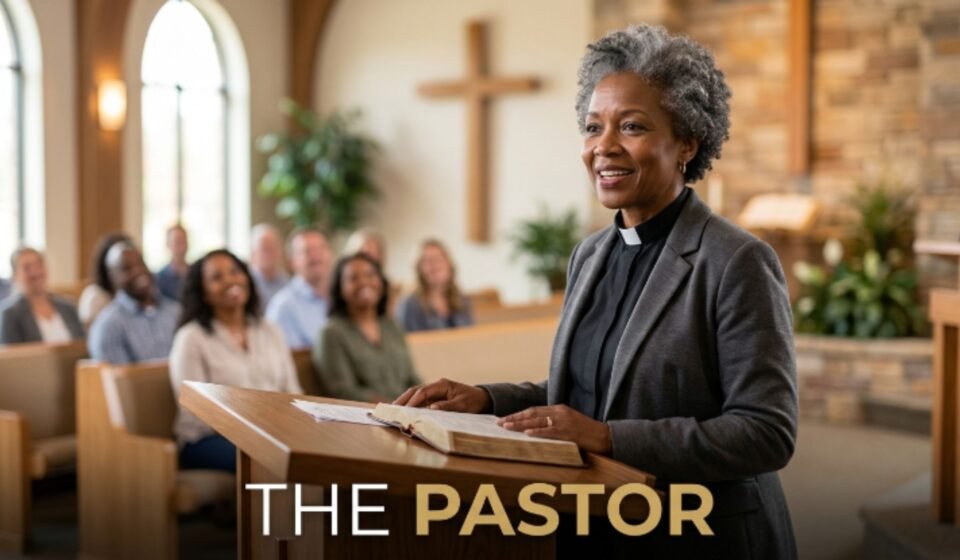

If you have ever typed one of these words and then paused, wondering if autocorrect just betrayed you, you are not alone. Paster or Pastor is one of those English word pairs that looks almost identical but means something completely different.
This confusion shows up everywhere, from church newsletters to construction sites, and it usually happens because both words share the same first four letters. Once you understand the word meaning behind each one, though, the mix up disappears almost instantly.
Paster
A paster is someone or something related to pasting, sticking, or gluing things together, like papers or posters.
Pastor
A pastor is a religious leader who guides a church community, gives sermons, and offers spiritual guidance to people.
Paster or Pastor: Quick Answer ✅⚡
Both words are technically real, but they are used in totally different situations. Knowing the main difference early saves you from a lot of awkward mix ups later.
Think of it this way: one word belongs in a sermon, the other belongs on a wall covered in glue. Keeping that mental image handy will help you choose the correct word almost every time you write.
✔ Main Difference:
Pastor refers to a church leader who leads prayers and sermons, while paster refers to a person or object involved in pasting or sticking things like posters and papers.
📌 Examples:
The pastor delivered a moving sermon on Sunday morning. The poster paster worked all night sticking up flyers around town.
Definitions with Examples 📖✍️

Understanding both word meanings clearly is the fastest way to avoid confusing them in your writing or speech.
🟢 Pastor (Definition)
A pastor is a spiritual leader, usually connected to a Christian church, whose job includes preaching, praying, and offering spiritual guidance to their community.
Beyond the sermon on Sunday, a pastor often counsels families, visits the sick, and helps organize events that bring the whole community together throughout the week.
📌 Examples:
Our pastor visited our home to pray with the family. The church leader shared a message of hope during the service.
🔵 Paster (Definition)
A paster is someone who uses glue or paste to stick things, most commonly linked with poster paster work like putting up banners and papers.
This term also applies loosely to any work tool or process built around sticking papers, whether that is a print shop worker or someone assembling a scrapbook at home.
📌 Examples:
The paster used strong glue to fix the torn poster. He works as a poster paster for the local theatre company.
🟡 Simple Meaning
In the simplest terms, think of pastor as a person of faith and paster as a person of paste. One deals with prayer, the other deals with sticking things.
The Origin of Pastor and Paster 📜⏳
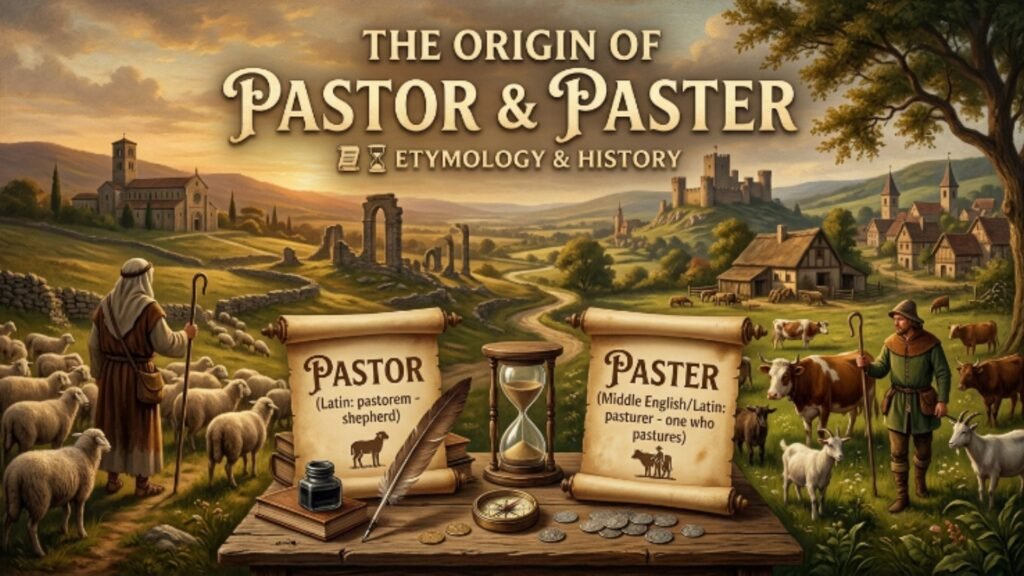
Word history often explains why two words sound alike but mean something so different, and this pair is a great example.
🟢 Pastor Origin
The word pastor comes from Latin, originally meaning shepherd. Over time, the meaning shifted to describe someone who guides and protects people spiritually, much like a shepherd guides sheep.
This etymology explains why so many religious texts describe congregations as a “flock” and their leader as the one watching over them with care and patience.
🔵 Paster Origin
Paster comes directly from the verb paste, which describes the act of sticking or gluing something onto a surface. Add “er” to the root word and you get someone who performs that action.
This same pattern shows up in plenty of other English job titles, where adding “er” to an action word instantly turns it into the person doing that job, like painter or writer.
British English vs American English Spelling 🌍🇬🇧🇺🇸
A lot of people assume this confusion comes from regional spelling differences, similar to debates like yogurt or yoghurt.
📌 Key Point:
Unlike many British English versus American English spelling battles, pastor and paster are spelled the same way in both UK English and US English. There is no regional spelling variation here.
So whether you are writing for a US audience, a UK reader, or anyone in between, you can use the same spelling convention without worrying about localizing the word itself.
📊 Comparison Table:
| Word | UK Spelling | US Spelling | Meaning |
| Pastor | Pastor | Pastor | Religious leader |
| Paster | Paster | Paster | Person who pastes |
Paster vs Pastor: Key Difference Explained 📊⚖️
Since spelling is not the issue, the real challenge is word usage in the right context.
📊 Comparison Table:
| Feature | Pastor | Paster |
| Field | Religion | Work or craft |
| Role | Church leader | Person who pastes |
| Common setting | Church service | Print shop or street posters |
| Frequency | Very common | Rare word |
📌 Example:
The pastor prayed for the entire congregation, while the paster spent hours sticking papers on the wall outside.
Which Spelling Should You Use? 🎯📝
Choosing the correct word really comes down to what you are talking about, not how the word sounds.
✔ Use Pastor When:
You are referring to a religious leader, someone preaching a sermon, offering spiritual guidance, or leading a Sunday service at church.
✔ Use Paster When:
You are talking about someone physically pasting or sticking things, like a poster paster putting up banners or papers around a neighborhood.
⚖️ Easy Tip
If the sentence involves church, prayer, or community, go with pastor. If it involves glue, posters, or sticking papers, go with paster.
📌 Usage Tip (Very Important) 🧠✨
Here is a trick that many writers use to lock in the correct spelling for good, and it genuinely works fast.
📌 Examples:
Remember that paster contains the word “paste” right inside it, which is a built in reminder of its meaning. Pastor does not contain paste at all, so if you see “paste,” think sticking, not preaching.
Common Mistakes with Paster or Pastor ❌⚠️
Even confident writers slip up here, mostly because the words are homophones or close to it in casual speech.
1. Mixing Meanings
People sometimes use paster when they actually mean pastor, especially in fast typing or texting where autocorrect does not always catch it. This kind of mixing meanings can change the entire tone of a sentence without the writer even noticing.
2. Spelling Confusion
Since both words share the same first four letters, spelling confusion happens more often in written content than in speech. Reading your sentence out loud before publishing is a simple way to catch this kind of slip.
3. Using Wrong Context
Writing “the paster gave a sermon” is a classic wrong context mistake that instantly signals a typing error to careful readers. Context clues around the sentence almost always reveal which word actually belongs there.
4. Typing Errors
Quick typing on phones leads to typing errors more than actual confusion about meaning, so always proofread before sending an important message. A quick second read through your message can save you from an embarrassing correction later.
Pastor and Paster in Everyday Examples 💬📱
Seeing both words used naturally across different settings makes the difference stick much better than any definition alone.
⛪ Religion
The pastor led the prayer with such warmth that even first time visitors felt welcomed into the church service. Many churches also describe their pastor as someone who checks in personally on members going through a hard week.
🧴 Work
The poster paster carefully applied glue to each corner, making sure the banner would not peel off overnight. Event teams often hire a dedicated paster just to handle large scale flyer campaigns around a city.
📱 Social Media
A user might post online, “Our pastor shared a message today that really hit home,” showing how pastor naturally fits daily communication. This kind of online writing is exactly where small spelling slips tend to slip through unnoticed.
🏠 Daily Use
At home, you might say “I need a paster to fix this torn wallpaper,” which shows the practical, everyday side of the word. It is a small but real example of how everyday usage keeps this less common word alive.
Pastor vs Paster: Google Trends & Usage Data 📊📈
Looking at real search data helps explain why one word feels so much more familiar than the other.
🌍 Trends:
Pastor is searched far more often worldwide because religious leaders and church topics are part of daily conversation for millions of people, while paster stays a rare word mostly limited to specific work contexts.
📊 Region Table:
| Region | Pastor Searches | Paster Searches |
| United States | High | Low |
| United Kingdom | High | Low |
| Pakistan | Moderate | Very Low |
| India | Moderate | Very Low |
🔥 Top 10 Searches:
Common search queries include “pastor meaning in English,” “is paster a real word,” “paster or pastor which is correct,” “pastor vs paster pronunciation,” and “difference between pastor and paster,” among others that reflect genuine reader confusion.
Comparison Table 📋⚖️
| Aspect | Pastor | Paster |
| Definition | Church leader | Person who pastes |
| Origin | Latin, meaning shepherd | From the verb paste |
| Usage frequency | Common | Rare |
| Context | Religious | Practical or craft based |
| Spelling difference (US/UK) | None | None |
Pastor and Paster Pronunciation: What’s the Real Difference? 🔊🗣️
Beyond spelling, many readers actually search for pronunciation help because these words can sound close when spoken quickly. Pastor is pronounced with a shorter, softer ending, while paster carries a slightly longer emphasis on the “paste” sound. Practicing both out loud a few times usually clears up any lingering sound confusion for good.
Related Confusing Word Pairs You Should Know 🧩📚
English is full of tricky pairs like paster or pastor, and knowing a few more can sharpen your overall writing skills. Pairs like vain or vein, feel or feal, convertor or converter, and nill or nil trip up writers for the exact same reason, similar spelling but very different meaning. Building awareness around these commonly confused words makes you a noticeably stronger and more confident writer over time.
Why Getting This Right Matters for Writers ✍️🎯
Small spelling mistakes might seem harmless, but they can quietly damage your credibility as a writer, especially in professional or published content. A reader who spots “paster” in place of “pastor” may start questioning the accuracy of everything else in your piece.
This matters even more for content creators, students, and professionals writing church newsletters, blog posts, or official documents where precision reflects directly on your reputation. Taking a few extra seconds to double check word usage is always worth the effort.
Search engines also reward user-focused, accurate content, so getting commonly confused words right can genuinely help your writing perform better online. It is a small habit that pays off in both trust and visibility over time.
FAQs
1. Is paster a real word?
Yes, paster is a real word, though it is considered a rare word compared to more commonly used terms.
3. Are both correct?
Yes, both pastor and paster are correct spellings, but they are correct in completely different contexts.
4. Which is more common?
Pastor is used far more often in everyday language because it relates to religion and community, topics people discuss regularly.
5. Can I use paster for church?
No, paster should never be used for church related roles. Always use pastor when referring to a religious leader.
6. Why confusion happens?
The confusion mostly comes from similar spelling and quick typing, not from actual pronunciation overlap between the two words.
7. Easy way to remember?
Just remember that paster has “paste” hidden inside it, a simple memory trick that instantly points you toward the correct meaning.
Conclusion 🧾📌
At the end of the day, paster or pastor really comes down to context. One belongs in a church with prayer and sermons, and the other belongs wherever glue and posters are involved. Keep that simple rule in mind, and you will never mix up this word pair again.