
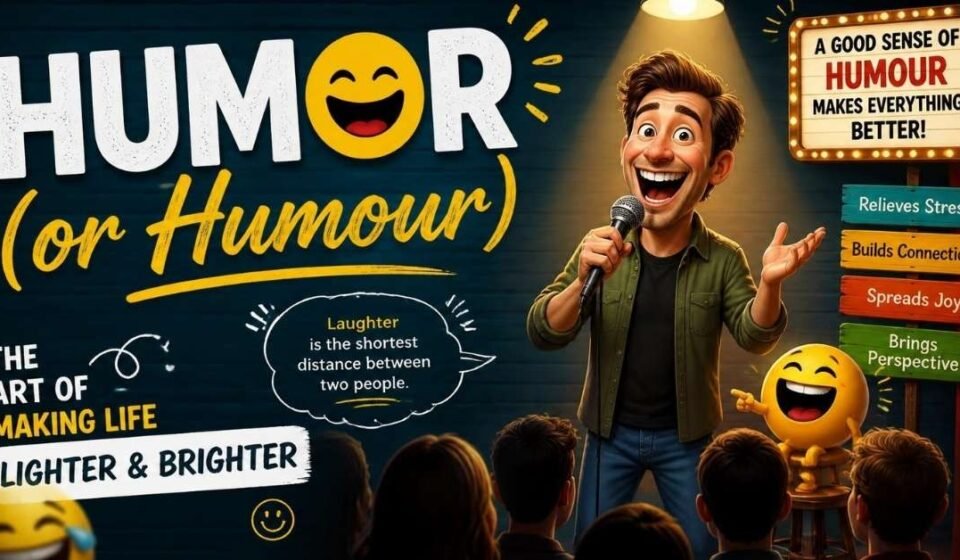

Quick answer before we get into the weeds: both spellings are correct. Humor is the American English version, and humour is the British English version. Neither one is a typo. Neither one is “wrong.” It’s just geography doing its thing.
If you’ve ever paused mid-sentence wondering which one to type, you’re not alone. This mix-up trips up writers, students, and even native speakers all the time. Let’s clear it up for good.
Humor

This is the spelling you’ll see across the United States. Newspapers, textbooks, social media posts, all of it. If your audience is American, humor is your go-to.
Humour

This one belongs to the United Kingdom, along with most Commonwealth countries like Canada, Australia, and India (though Canada sometimes mixes both, more on that later). Same word, same meaning, just dressed differently.
Humor or Humour: Quick Answer ✅
Here’s the deal in plain terms: there’s no meaning difference between these two words. They’re pronounced the same way too. The only thing separating them is regional spelling, and that comes down to which side of the Atlantic your reader lives on.
Think of it like ordering “fries” versus “chips.” Same food, different label depending on where you are.
✔ Main Difference:
Humor drops the “u” and keeps things short, which is typical of American spelling. Humour keeps the extra “u,” following older British spelling patterns. That’s genuinely the whole story.
📌 Examples:
- She has a great sense of humor. (American)
- He has a great sense of humour. (British)
- The comedian’s dry humor had the whole room laughing. (American)
- The comedian’s dry humour was subtle but sharp. (British)
What Does “Humor/Humour” Mean? 📖😄
At its core, humor refers to the quality of being funny, that spark that makes people laugh or smile. It’s tied to wit, amusement, and the ability to see the lighter side of things. Someone with a strong sense of humor can find comedy in everyday moments, even awkward ones.
The word covers a lot of ground too. It can describe a personality trait (“she’s got a great sense of humor”), a genre (“this movie is pure humor”), or even a coping mechanism people use during stressful times. It’s flexible like that.
📌 Examples:
- His humor helped lighten the mood during a tense meeting.
- The book relies heavily on humour to tackle serious topics.
- Kids often develop their sense of humor by watching how adults react to jokes.
Humor vs Humour: Core Difference ⚖️
Let’s be blunt: there is no difference in meaning, tone, or usage rules between these two. The core difference is purely spelling, rooted in regional language differences between American English and British English.
Where things actually change is in style guides. American publications almost always require humor, while British and Commonwealth publications lean on humour. Mixing the two in one piece of writing looks sloppy, even though each spelling alone is perfectly fine.
📊 Comparison Table:
| Feature | Humor (American) | Humour (British) |
| Region | United States | UK, Commonwealth |
| Meaning | Same | Same |
| Pronunciation | Identical | Identical |
| Style Guide Preference | AP, US publishers | Oxford, UK publishers |
| Related Words | Color, Flavor | Colour, Flavour |
Why Are There Two Spellings? 📜
This split didn’t happen by accident. It’s the result of centuries of language evolution, plus one very determined lexicographer we’ll talk about shortly.
British English Often Keeps “OU”
British spelling tends to preserve older French-influenced patterns. Words like colour, favour, and flavour all follow this same “OU” pattern, and humour fits right in with them. It’s a family of words that stuck close to their Middle English and French roots.
American English Often Simplifies
American spelling, on the other hand, trimmed the fat. Simpler, shorter, more phonetic, that was the philosophy. So colour became color, favour became favor, and humour became humor. It wasn’t laziness, it was intentional simplified spelling reform.
History of Humor/Humour 📚
The word actually traces back to Latin, specifically “umor,” meaning fluid or liquid. Strange starting point, right? Ancient and medieval medicine believed the body contained four fluids, or “humours,” that controlled mood and temperament. Too much of one fluid supposedly made you gloomy, too much of another made you cheerful.
Over time, the word passed through French and into Middle English, gradually shifting from “bodily fluid” to “mood,” and eventually to “the quality of being funny.” By the 18th century, humor had settled into roughly the meaning we use today. The spelling split, though, came later.
Noah Webster and American Spelling 🇺🇸📖
Here’s where things get interesting. Noah Webster, the same guy behind Webster’s Dictionary, wasn’t just documenting language. He wanted to reshape it.
Webster believed American English deserved its own identity, separate from British rule, even in spelling. He pushed for American spelling reforms that stripped out what he saw as unnecessary letters.
His Goals Included:
- Making English easier to learn for new immigrants and children
- Creating a distinct American identity apart from Britain
- Streamlining words to match how they’re actually pronounced
- Cutting silent or redundant letters wherever it made sense
Thanks to Webster, humor, color, and favor became the standard across the United States, while Britain kept its original forms.
How to Pronounce Humor and Humour 🔊
Good news here: there’s zero pronunciation difference between these two spellings. Say either word out loud, and it sounds identical. This surprises a lot of people who assume different spelling means different sound.
Pronunciation:
Both are pronounced /ˈhjuː.mər/ in IPA pronunciation terms, roughly “HYOO-mer.” Whether you’re in New York or London, your mouth is doing the exact same thing. The only difference lives on the page, never in spoken English.
Different Types of Humor 🎭
Not all jokes land the same way, and that’s because humor comes in several distinct flavors. Knowing these types helps you understand comedy, writing styles, and even personalities better.
1. Dry Humor
Dry humor delivers jokes with a straight face, no exaggeration, no obvious punchline setup. It relies on understatement, and the joke often sneaks up on you a beat later.
2. Dark Humor
This type pokes fun at serious or uncomfortable topics like death or illness. It’s not for everyone, but dark humor helps people process heavy emotions through laughter.
3. Slapstick Humor
Think pratfalls, exaggerated actions, and physical comedy. Slapstick humor doesn’t need clever wordplay, just well-timed chaos.
4. Sarcastic Humor
Sarcastic humor says one thing but means the opposite, often dripping with irony or mild mockery. It’s a favorite in workplaces and group chats alike.
5. Self-Deprecating Humor
This style pokes fun at yourself before anyone else can. It’s disarming, relatable, and often used to build instant rapport with an audience.
Humor/Humour in Everyday Examples 💬📱
You’ll spot both spellings constantly once you start paying attention, especially depending on where the content comes from.
🏠 Daily Life
Someone might say, “My dad’s humor is so corny it’s actually funny,” if they’re American. A British friend might instead comment on their grandad’s dry humour at Sunday dinner.
📱 Social Media
Internet humor rarely worries about spelling rules, but brands do. A US-based company will consistently write humor in captions, while a UK brand sticks with humour to match its audience.
📚 Academic Writing
In academic writing, consistency matters a lot. Papers published through American universities use humor, while UK-based journals expect humour throughout.
💼 Professional Writing
Professional writing, like reports or marketing copy, should match the target region. Global companies often adjust spelling based on which country their content is aimed at.
Humor in Psychology and Communication 🧠📚
Humor isn’t just entertainment, it’s a legitimate communication tool. Psychologists have studied how humor psychology affects mood, stress reduction, and even physical health. Laughing genuinely lowers stress hormones and boosts positive emotions.
It also plays a huge role in social bonding. Sharing a laugh with someone builds trust fast, faster than most other social interactions. That’s why workplace humor, used carefully, can strengthen interpersonal relationships among coworkers.
Psychological Effect Example
Imagine two coworkers stuck in a stressful project. One cracks a small joke about the chaos, and suddenly the tension in the room drops. That’s humor doing real psychological work, not just filling silence.
British Humour vs American Humor
Beyond spelling, there’s actually a cultural conversation here worth having. The comedy styles themselves often differ by region.
British Humour Often Includes:
British humour leans heavily on dry wit, irony, and understatement. Shows like sitcoms from the UK often use awkward silences and subtle sarcasm rather than loud punchlines.
American Humor Often Includes:
American humor tends to be more direct, with bigger setups and clearer punchlines. Observational comedy and direct jokes are common, think stand up specials built around relatable, everyday frustrations.
Common Mistakes with Humor and Humour ❌⚠️
Even careful writers slip up here sometimes. Let’s fix the usual suspects.
1. Mixing British and American Spelling
Using humor in one paragraph and humour in the next looks inconsistent. Pick one based on your audience and stick with it throughout.
2. Thinking One Spelling Is Wrong
Neither spelling is a mistake on its own. Judging humour as “incorrect” just because you’re used to humor is a common misunderstanding.
3. Using British Spelling in US Style Guides
If you’re writing for an American publication following AP style, humour will get flagged during editing. Match your style guide, not your personal habit.
4. Forgetting Regional Context
Global brands sometimes forget to adjust spelling per market. A UK ad campaign using humor instead of humour can feel oddly out of place to local readers.
Memory Tricks to Remember Easily ✨
Struggling to remember which is which? These tricks make it stick fast.
👉 Trick 1: British English Loves “OU”
If you can picture the Queen’s English, picture extra letters too. Colour, favour, flavour, humour, they all share that “OU” pattern.
👉 Trick 2: American English Simplifies
Americans like things short and efficient. Drop the “u,” and you’ve got the U.S. version every time.
👉 Trick 3: Think Geography
U for “UK” reminds you that Britain keeps the extra letter. No “u,” no “UK” connection, that’s your American English clue.
Humor/Humour in Formal and Informal Writing 📚
Context shapes which version feels right, and it goes beyond just American versus British.
✔ Formal Usage
In formal writing, like legal documents or academic essays, stick strictly to your target region’s spelling. Consistency in spelling signals professionalism and attention to detail.
✔ Informal Usage
Informal writing, texts, casual blog posts, social captions, tends to be more forgiving. Still, picking one spelling and keeping it consistent makes your writing look polished rather than careless.
Comparison Table 📋
| Category | Humor | Humour |
| Country | USA | UK, Canada, Australia |
| Style Guide | AP, Chicago | Oxford, Cambridge |
| Related Word | Color | Colour |
| Word Origin | Latin via French | Latin via French |
| Common In | US media, tech blogs | UK media, literature |
Humor or Humour: Usage Trends & Popularity 📊
Search trends show that humor gets searched far more often globally, mostly because the US has a larger English-speaking online population. That doesn’t make humour less valid, just less frequent in raw numbers.
📌 Trend Insight:
Content targeting American audiences almost always ranks better using humor simply because that’s what people type into Google searches. Meanwhile, UK-focused content performs better with humour for the exact same reason.
Search Trends:
Google Trends data consistently shows humor spiking in US regions while humour dominates searches from the UK, Australia, and India. Audience expectations really do shape search behavior.
Common User Queries 🔍
People searching this topic usually want quick, specific answers, not a linguistics lecture. Common questions include whether one spelling is more “correct,” whether meaning changes, and which version fits their writing project. This article has covered all of it, but the FAQ section below tackles these head on for anyone skimming.
Conclusion 🧾📌
At the end of the day, humor and humour are the same word wearing two different regional outfits. One isn’t smarter, older, or more “proper” than the other, they simply belong to different parts of the English speaking world.
Pick your spelling based on your audience, stay consistent, and you’ll never trip over this again. Got a favorite version, or a funny story about mixing these up? Drop it in the comments, I’d genuinely love to hear it.
FAQs ❓💡
1. Which spelling is correct?
Both are correct. Humor is American, humour is British, and neither is a mistake.
2. Is humor American English?
Yes, humor is the standard spelling across the United States.
3. Is humour British English?
Yes, humour is standard across the UK and most Commonwealth countries.
4. Do they mean different things?
No, they share the exact same meaning: the quality of being funny or amusing.
5. Is pronunciation different?
Not at all. Both spellings are pronounced identically, /ˈhjuː.mər/.
6. Which spelling should I use?
Match it to your audience’s region, or your publication’s style guide, and keep it consistent.
7. Easy rule?
Remember: U for UK means keep the “u.” No U, no UK, that’s American humor.