
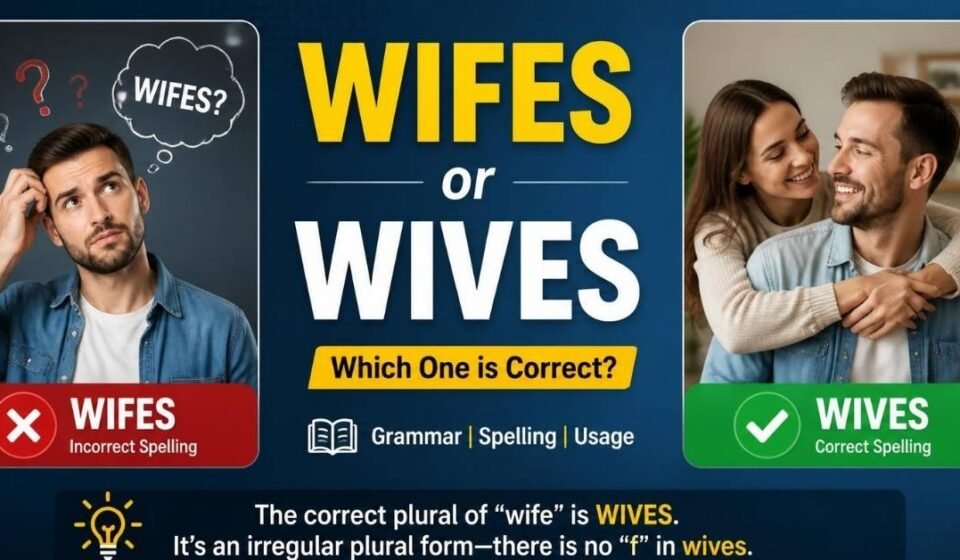

Ever typed “wifes” in a text and then just… stared at it?Something felt off, right?You’re not alone. This mix-up trips up native speakers and ESL learners alike. So let’s clear it up, once and for all.Wives is the correct plural of wife. It’s the only version you’ll find in any major dictionary, any academic writing, any news articles. No exceptions.Say it out loud. “My wives are coming to the party.” Wait, that only works if you’re talking about more than one wife, obviously. But you get the point. The spelling is wives, always.
Wifes isn’t a word. Not in standard English, not in casual writing, not anywhere that matters.It shows up because people apply a rule that doesn’t fit here. It looks logical on paper. It just happens to be wrong.
Wives or Wifes – Quick Answer
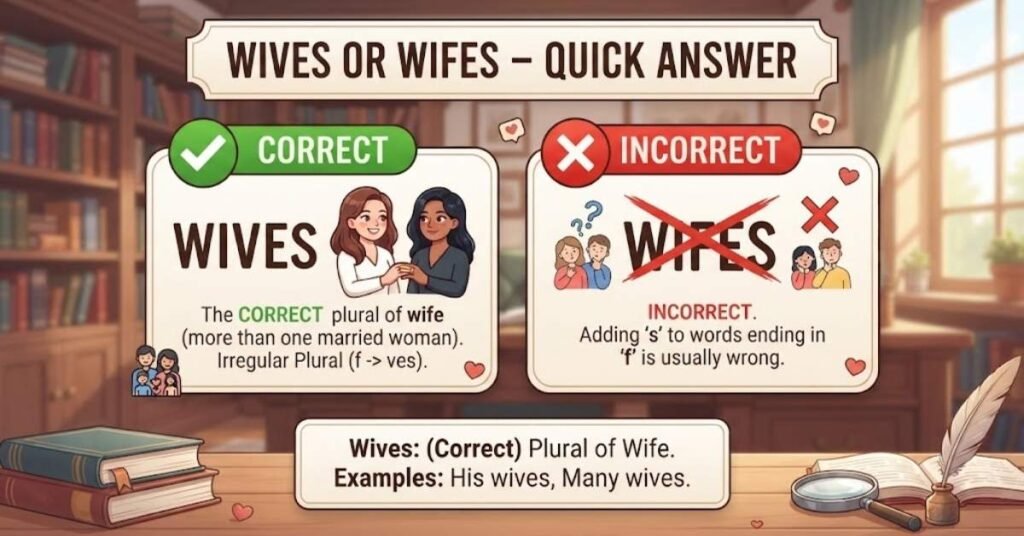
Here’s your answer before you scroll any further: use wives. Never wifes.
That’s it. That’s the whole rule in one sentence. If you came here just to confirm your gut feeling, you were right.
Simple Examples:
- Correct: “Both wives attended the ceremony.”
- Incorrect: “Both wifes attended the ceremony.”
- Correct: “Their wives planned the dinner together.”
- Incorrect: “Their wifes planned the dinner together.”
Save these. Bookmark this page if you need to. Whatever helps you remember it next time your fingers try to type wifes.
The Origin of Wives or Wifes
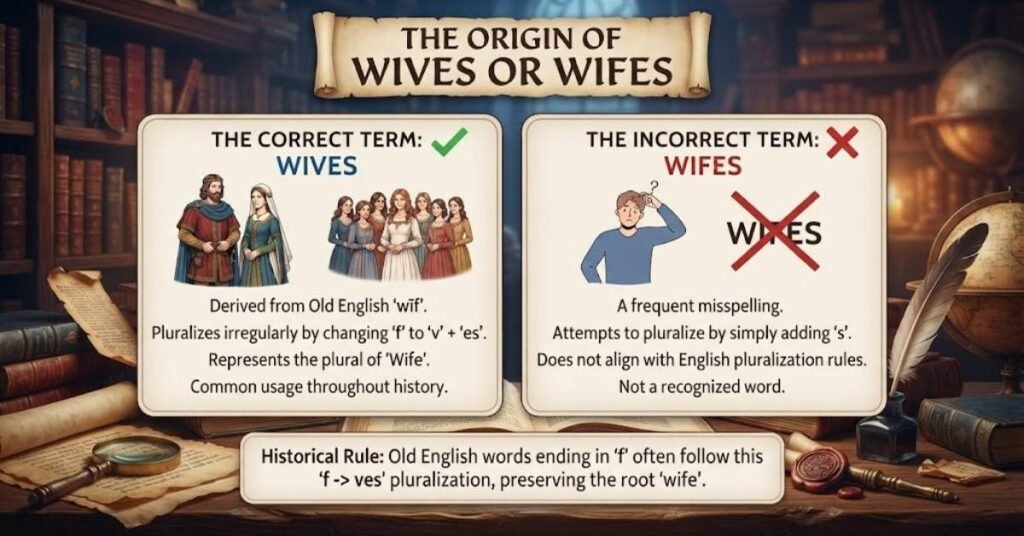
Curious why English does this weird switcheroo? It goes back further than you’d think.
Old English Roots
The word traces back to Old English wīf, which just meant woman or wife. Back then, certain words ending in f or fe shifted their final sound when you added a plural ending. Over centuries, that shift stuck as a spelling rule.
So when wife became plural, the f turned into a v, and we got wives. It’s an old habit that English never dropped. Weird? A little. Consistent? Actually, yes, within its own little category.
Examples of the Same Pattern:
You’ll spot this f to v rule everywhere once you know it exists.
- knife → knives
- life → lives
- leaf → leaves
- wolf → wolves
Notice a pattern? Words ending in fe or certain f sounds often swap that letter for a v before adding es. This is called the fe to ves rule, and wife just happens to follow it.
Why “wifes” Exists as a Mistake
So why do people still write wifes? Simple. The regular add s rule is the default setting in most of our brains.
Cats becomes cats. Dogs becomes dogs. So wife should become… wifes? That’s the logic, and it’s not a dumb one. It’s just aimed at the wrong word. Wife belongs to a small club of irregular plural nouns that skip the standard playbook entirely.
British English vs American English Spelling
Good news here. This isn’t one of those annoying British English versus American English spelling battles, like colour versus color.
Wives is the accepted plural in US English, UK English, and every other major English variant out there. No regional split. No confusing exceptions depending on where you live.
Comparison Table
| Region | Correct Plural | Notes |
| American English | Wives | Standard in all writing |
| British English | Wives | Identical usage |
| Australian English | Wives | No regional variation |
| Canadian English | Wives | Follows both US and UK norms |
| Commonwealth English | Wives | Universally accepted |
See that? One column, same answer, every single time. That kind of consistency is rare in English, so enjoy it while it lasts.
Which Spelling Should You Use?
Short answer, wives, everywhere, always. But let’s break it down by audience anyway, because context still matters for tone and formality.
For US audiences
American readers expect wives in everything from casual emails to legal documents. There’s zero flexibility here, so don’t second guess yourself mid sentence.
UK audiences
Same story across the pond. Wives shows up in British newspapers, novels, and everyday chats. No twist, no local variant waiting to surprise you.
For Australia, Canada, and Commonwealth countries
Whether you’re writing for readers in Sydney, Toronto, or Nairobi, wives holds steady. Commonwealth English doesn’t carve out its own version here, which honestly makes your job easier.
For global and ESL audiences
If English is your second language, this one’s actually a gift. You only need to memorize one spelling, not five. Learn wives, apply it everywhere, move on to trickier grammar problems.
Common Mistakes with Wives or Wifes
Let’s talk about where people actually slip up. Because knowing the mistake helps you dodge it next time.
1. Applying the regular plural rule
Most errors happen because writers default to the regular plural rule. Add an s, done, right? Not with wife. This single habit causes most of the incorrect plural spellings you’ll spot online.
2. Confusion with pronunciation
Here’s a sneaky one. Say “wife” and “wives” out loud. The sound shifts a little, and that shift can throw off spelling, especially for people learning by ear rather than by reading.
3. ESL learner confusion
ESL learners often study general plural form rules before they hit the exceptions list. So wifes feels like a safe bet, until it isn’t. This is one of the most searched grammar questions among non-native speakers for exactly that reason.
4. Autocorrect trust
Ironically, autocorrect sometimes lets typos slide if you’re typing fast on mobile, especially in apps with weaker spell check. People trust the red squiggly line to catch everything. It doesn’t always.
Quick Fix Tip
Picture a knife turning into knives. If that image sticks, wife turning into wives will stick right alongside it. One mental trick, two problems solved.
Wives or Wifes in Everyday Examples
Theory is nice, but let’s see this play out in the real world, where you’ll actually need it.
Emails
Picture writing to a colleague: “Please extend the invitation to employees and their wives.” Clean, professional, correct. Swap in wifes and suddenly your email looks careless, even if the rest of the message is sharp.
News
News articles almost always get this right, since editors catch it fast. “Soldiers and their wives gathered for the event” reads naturally in any publication, big or small.
Social Media
Social media is where things get messy. Fast typing, no editor, zero proofreading. You’ll spot wifes more here than anywhere else, which says a lot about where casual writing habits creep in.
Formal Writing
In academic papers, legal writing, or any formal writing, wifes is an instant red flag. It signals sloppiness before a reader even finishes the sentence. That’s a real cost to your credibility.
Wives or Wifes – Google Trends & Usage Data
Here’s something interesting. Search behavior shows people genuinely wonder about this, a lot. Queries like “is wifes a word,” “wife vs wives,” and “correct spelling of wives” show consistent search volume month after month.
That tells you two things. First, this confusion is widespread, not rare. Second, search intent here is usually quick and practical. People want a fast, confident answer, not a linguistics lecture. Which is exactly why clear, direct grammar guides tend to earn strong ranking potential on this topic.
Comparison Table: Keyword Variations
Different people search this question differently. Here’s how the common variations stack up.
| Search Phrase | Correct Form | Common Confusion |
| Wives or wifes | Wives | Regular plural rule applied incorrectly |
| Wife plural | Wives | Assumed to follow standard “s” pattern |
| Wife’s or wives | Depends on context | Possessive versus plural mix-up |
| Wives vs wifes | Wives | Wifes is simply not a real word |
| Is wifes a word | No | Common myth among casual writers |
📝 Wife, Wives, and Possessive Forms Explained
Now here’s where things genuinely get tricky, even for confident writers. Plural and possessive form are two completely different jobs, but they look similar enough to confuse people constantly.
Wives just means more than one wife. No ownership involved, no apostrophe needed. But the moment you’re talking about something belonging to a wife, or to wives, the spelling changes shape entirely, and that’s where most spelling errors actually start piling up.
Understanding Possessive Forms (Bonus Clarity)
Let’s untangle this properly, because it’s simpler than it looks once you see the pattern laid out.
Singular Possessive
For one wife owning something, you write wife’s. Example: “My wife’s car is in the garage.” One wife, one apostrophe, before the s.
Plural Possessive
For multiple wives owning something, you write wives’. Example: “The wives’ meeting starts at noon.” Notice the apostrophe jumps after the s this time, since wives already ends in s.
Here’s a memory trick that actually works. Singular owner, apostrophe before s. Plural owners, apostrophe after s. Say that a few times and it locks in fast.
Why This Grammar Rule Still Trips Up Confident Writers
Even strong writers slip here occasionally, and there’s a real reason for that. English rewards consistency, then breaks its own pattern for a small group of words. Your brain wants one clean rule to apply everywhere. English just doesn’t offer that convenience.
Add in speed typing, mobile keyboards, and general multitasking, and small errors like wifes sneak through even careful writers’ drafts. That’s not a character flaw. It’s just how attention and habit interact under pressure.
How This Small Mistake Affects Your Writing Credibility
Here’s the part people underestimate. One wrong plural won’t ruin your writing. But readers notice patterns, not isolated mistakes.
If wifes shows up in a business writing email or a client proposal, it plants a small seed of doubt. Is this person careful? Detail oriented? That seed grows fast, especially in professional writing, where trust and professionalism matter more than raw talent.
Bloggers, students, and professionals all benefit from nailing small grammar details like this one. It’s not about perfectionism. It’s about clarity and confidence landing the way you intended.
Conclusion
So here’s where we land. Wives is correct, everywhere, in every context, for every audience. Wifes simply isn’t a real word, no matter how logical it looks in the moment.Remember the trick: knife becomes knives, wife becomes wives. Same family, same pattern, same fix. Keep that picture in your head and this mistake won’t bother you again.
Got a grammar question like this one that keeps bugging you? Drop it in the comments. Someone else is probably wondering the exact same thing.
FAQs
1. Is “wifes” ever correct?
No. Wifes is not accepted in any standard English dictionary or writing style, formal or casual.
2. Why does wife change to wives?
It follows the fe to ves rule, an old pattern from Old English where certain f and fe endings shift to v before adding es.
3. Is wives used in British English?
Yes. British English and American English both use wives as the correct plural, with zero regional differences.
4. What about possessive forms?
Use wife’s for one wife’s possession, and wives’ for possession involving multiple wives. The apostrophe placement is the only difference.
5. Are there similar words to remember?
Yes, plenty. Knife to knives, life to lives, leaf to leaves, and wolf to wolves all follow the same f to ves pattern as wife.
6. Can I write “wife’s” instead of wives?
Only if you mean something belonging to one wife. If you simply mean more than one wife, stick with wives, no apostrophe needed.
7. Do dictionaries accept wifes?
No major dictionary lists wifes as a valid word. It’s treated purely as a common spelling mistake, not an alternate form.


